Infographic
Application Detection and Response (ADR): Helping SecOps teams address NIST CSF

The security operations center (SOC) requires the right combination of people, processes and technology to protect the organization's assets.
Most SOCs lack visibility into the application and application programming interface (API) layer.
Threat actors inside the application and API layer can bypass other controls, get access to vulnerable data and launch devastating attacks.
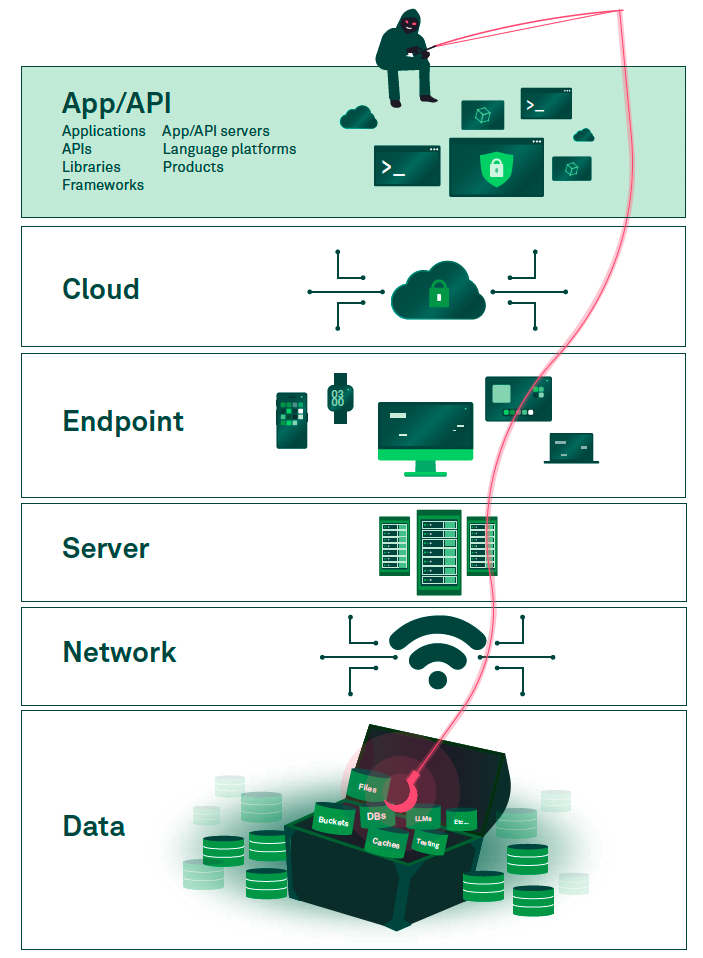
How the SOC can stop application layer attacks
The Cybersecurity Framework (CSF) from the National Institute of Standards and Technology (NIST) is designed to help organizations better understand and more effectively manage their cybersecurity risk. As such, it’s particularly useful to SecOps — especially at the application layer.
| NIST CSF core function | Current SOC activities |
How Application Detection and Response (ADR) can help |
Govern |
Compliance management, policy enforcement | ADR automatically generates detailed, real-time security blueprints of every application and API, including how they connect with each other. These blueprints help teams ensure compliance with regulatory requirements and enable effective security governance across the organization. |
Identify |
Threat and vulnerability management and Red Team activities | ADR extends visibility to the application and API layer, providing detailed context of anomalous behavior throughout the entire software stack. |
Protect |
Security tooling validations | Identifies anomalies that indicate security incidents. |
Detect |
Security monitoring, shadow IT monitoring, data loss prevention | With ADR, analysts can track lateral movement from its point of origin — in applications and APIs — and stop the incursion before it becomes persistent. |
Respond |
Incident response and investigation, digital forensics | Automatically takes action to mitigate threat and/or provides information so the incident response team can do it. |
Learn more about Contrast Security
You can't stop what you can't see
Schedule a demo and see how to eliminate your application-layer blind spots.
Book a demo