
X
On June 9, 2026, Anthropic released Claude Fable 5, its first generally available Mythos-class model. For application security teams, this is a critical development. Mythos-class is Anthropic's most capable tier. Of its locked-down sibling, Claude Mythos 5, Anthropic says it "has the strongest cybersecurity capabilities of any model in the world." For most of the past year that capability sat behind closed doors, available to a small group of cyber defenders through Project Glasswing. Now, a safeguarded version of it is generally available through the major Claude platform channels.
That is the headline for application security teams. Frontier vulnerability discovery just became cheap, fast and widely available, at 10 dollars per million input tokens, under half the cost of the preview that came before it. Attackers get the same upgrade you do. So the real question is no longer whether your applications will be scanned by a frontier model. They will. When that model hands you a list of hundreds or thousands of vulnerabilities, the question is which ones are actually worth fixing and in what order. That answer does not come from the model. It comes from runtime.
Claude Fable 5 matters for application security because it makes frontier vulnerability discovery broadly available. That shifts the bottleneck from finding vulnerabilities to validating, prioritizing and fixing the few that are actually exploitable in running applications. Security teams should treat any AI-generated vulnerability list as raw input, then use runtime evidence to decide what to fix first and what to block while fixes are underway.
Fable 5 and Mythos 5 are the same underlying model. The difference is the safeguards. Fable 5 is the general release, and it ships with safety classifiers that route cybersecurity, biology, chemistry and distillation requests to a less capable model, Claude Opus 4.8. Anthropic says this fallback triggers in fewer than 5 percent of sessions. Mythos 5 is the same model, with the cybersecurity safeguards lifted, and is available only to vetted cyber defenders through Project Glasswing and a planned trusted access program.
For defenders, the practical takeaway is simple. The capability that found vulnerabilities at scale inside Glasswing is now broadly accessible in a safeguarded form and the same class of capability is available to attackers who do not care about safeguards.
Anthropic was blunt about this in its Glasswing update. "Progress on software security used to be limited by how quickly we could find new vulnerabilities," the company wrote. "Now it's limited by how quickly we can verify, disclose, and patch the large numbers of vulnerabilities found by AI."
The numbers come from the predecessor system, Claude Mythos Preview, not Fable 5. Roughly 50 Glasswing partners used Mythos Preview to find more than ten thousand high- or critical-severity vulnerabilities in a single month. Anthropic reported that Cloudflare alone found 2,000 bugs, 400 of them high- or critical-severity. The average high- or critical-severity bug then took about two weeks to patch. Maintainers were so swamped that some asked Anthropic to slow down disclosures. Finding accelerated dramatically. Fixing did not.
This is the same gap Contrast has tracked for years. Vulnerabilities are weaponized in days, while patches routinely take weeks or months to deploy. The backlog of unaddressed vulnerabilities keeps growing. Fable 5 does not close that gap. It widens it, because it pours more confirmed findings into a remediation pipeline that was already overwhelmed.
This is the heart of it. The danger is not only that attackers can find vulnerabilities faster. The danger is that defenders will drown in plausible findings and burn scarce remediation time on vulnerabilities that are present in the code but not exploitable in their environment. A longer list is not progress. It is paralysis with better documentation.
Fable 5 and Mythos 5 are extraordinary at producing the list. They can even reason about exploitability and generate proofs. What they do not know is which findings matter most in your running applications, business context, compensating controls and production exposure. You can only answer that from inside the running application, and that is the job Contrast does.
Contrast instruments the application itself, so it observes real behavior in real time rather than guessing from static code. That lets teams separate vulnerabilities that merely exist in code or dependencies from vulnerabilities that are reached by real execution paths, tied to sensitive functions, exposed through a viable attack path and high in blast radius if exploited. The result is a smaller fix-now list built on runtime evidence rather than scanner volume. Across the environments Contrast observes, only a small fraction of reported vulnerabilities clear all of those tests. Targeted remediation, including automated fixes through SmartFix, then closes the ones that matter without forcing anyone to wade through thousands of low-value alerts.
This is where the volume problem inverts. A frontier model floods you with findings. Runtime evidence turns that flood into a short, prioritized list of what is actually worth fixing. The bigger the list the model produces, the more you need the filter.
Prioritization handles the backlog. It does not handle the attacker who uses the same Mythos-class capability to find and exploit a flaw before any patch ships. If AI speeds up exploit development over patch deployment, prevention cannot depend entirely on patching. Teams need a way to detect and block exploitation while fixes are still moving through development, testing, and release.
That is the role of runtime application defense, the category Contrast calls Application Detection and Response (ADR). Network and endpoint tools detect many threats, but they do not see inside the application's execution path, so they struggle to tell whether a specific vulnerability is actually reached, exploitable or being abused inside the running application. Contrast detects and blocks that exploitation from inside the application at runtime, in the same place where the attack actually executes.
Anthropic's own advice to defenders was to shorten patch cycles, harden default configurations, enforce multi-factor authentication and keep comprehensive logs. All correct, and all necessary. But faster patching alone cannot win a race where discovery has just accelerated and exploitation has just gotten cheaper.
Claude Fable 5 changes the economics of vulnerability discovery. It does not change the economics of enterprise remediation. Security teams still have limited developer time, fixed release windows, and no tolerance for false urgency. That is why AI-generated findings should be treated as raw input, not a work order. The work order should come from runtime evidence, what is actually reached, what is exploitable, what protects a critical business function and what can be blocked while the fix is underway.
In the Mythos-class era, the winners will not be the teams with the longest lists of vulnerabilities. They will be the teams that know which vulnerabilities matter first.
What is Claude Fable 5?
Claude Fable 5 is Anthropic's first generally available Mythos-class model, released June 9, 2026. Mythos-class is Anthropic's most capable tier, delivering state-of-the-art performance in software engineering and other areas. Fable 5 ships with safety classifiers that route cybersecurity, biology, chemistry, and distillation requests to a less capable model, Claude Opus 4.8, in fewer than 5 percent of sessions.
How is Claude Fable 5 different from Claude Mythos 5?
Fable 5 and Mythos 5 are the same underlying AI model. The key difference is the presence of safeguards. Fable 5 is the generally available version with safety classifiers enabled. Mythos 5 has these cybersecurity safeguards lifted and is restricted to vetted cyber defenders through specific programs.
What is the primary impact of Claude Fable 5 on application security?
Claude Fable 5 makes frontier-grade vulnerability discovery cheap and widely available. While this is beneficial for defense, it also accelerates the pace at which attackers can identify and exploit software flaws, significantly widening the gap between vulnerability discovery and patch remediation for security teams.
Can I just patch faster to keep up?
Faster patching helps, but it is not enough on its own. Anthropic's Glasswing data showed that bug-finding accelerated sharply, while the average high- or critical-severity bug still took about two weeks to patch. More findings without prioritization make the backlog worse, not better.
Do I still need application security tooling if an AI model already finds my vulnerabilities?
Yes. The model produces the list and can even prove a flaw is exploitable in the abstract. It does not know which findings are reachable and exploitable in your specific running application, or how to prioritize them against your business context. Runtime evidence supplies that prioritization.
How does Contrast Security help?
When a model hands you a list of vulnerabilities, Contrast tells you which ones to fix and in what order. It instruments the running application to determine which findings are actually reached by real execution paths, are genuinely exploitable, critical to function and have a high blast radius, narrowing a large list of findings to the small fix-now set that carries real risk. Through Application Detection and Response (ADR), Contrast also detects and blocks exploitation at runtime, inside the application, where network and endpoint tools lack execution context.
Why is runtime security necessary alongside AI-driven vulnerability scanners?
AI scanners generate lists of potential vulnerabilities based on static analysis, often resulting in "vulnerability fatigue." Runtime security, such as Application Detection and Response (ADR), provides the necessary context to determine if a vulnerability is actually reachable, exploitable, and business-critical within the live application environment.
What is the role of ADR in an AI-dominated security landscape?
Application Detection and Response (ADR) is a critical defense mechanism that operates within the application at runtime. By detecting and blocking exploitation attempts directly in the execution path, ADR protects organizations against threats even as fixes are being developed and tested.
Can organizations simply patch faster to mitigate AI-accelerated threats?
While faster patching is necessary, it is insufficient as a standalone strategy. Data indicates that vulnerability discovery speed has increased drastically, while remediation and patch deployment remain resource-intensive and time-consuming. Relying solely on patching creates an unmanageable backlog.
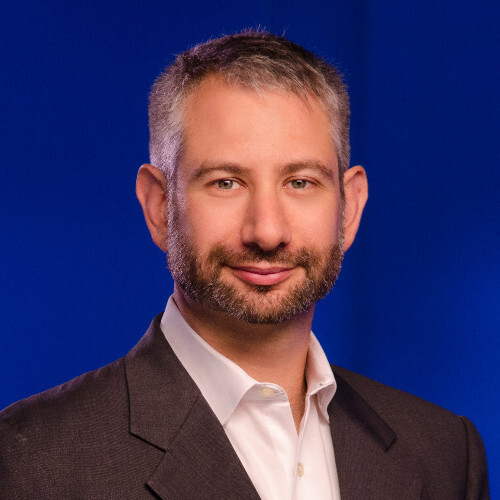
Jake Milstein is Vice President of Corporate Marketing & Communications at Contrast Security, where he drives awareness of Application Security and Application Detection & Response (ADR). Before entering cybersecurity, Jake spent much of his career leading newsrooms and newscasts at CBS, Fox, NBC, and ABC affiliates nationwide, earning multiple Emmy and Edward R. Murrow awards. He has since led sales and marketing teams at leading cybersecurity companies, helping customers stop breaches with Managed Detection and Response (MDR), Application Detection and Response (ADR), and a wide range of consulting services.
Get the latest content from Contrast directly to your mailbox. By subscribing, you will stay up to date with all the latest and greatest from Contrast.


