
X
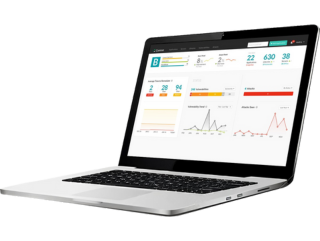
ASM moves beyond point-in-time testing to establish persistent visibility into the security posture of an application throughout its entire lifecycle, with a critical emphasis on the runtime environment. It involves embedding security instrumentation directly into the application to gather rich, granular data on how the code operates, what data flows through it and how it interacts with external resources. The goal is to establish a high-fidelity baseline of normal operational security and immediately flag any deviation. This continuous, code-level surveillance is distinct from network monitoring because it sees exactly what the application is doing internally, providing the essential context needed to differentiate between legitimate user input and malicious attempts to exploit a vulnerability.
Runtime context is the differentiating factor that elevates ASM from generic logging to an invaluable component of modern application defense. Security tooling operating at the perimeter, like a traditional Web Application Firewall (WAF), only sees the network packets related to outside requests without any knowledge of the application's internal state. Runtime context, provided by instrumentation, is the deep understanding of the inside of the application: knowing precisely which line of code is executing, what type of user input is being processed, and how that input is flowing from a trusted source (the user) to a sensitive sink (like a database query or a file system call). Without this context, security tools must rely on pattern matching, leading to high rates of both false positives (blocking legitimate traffic) and false negatives (missing novel attacks). ASM, operating within the runtime, eliminates this guesswork. It confirms the attack attempt by observing the payload attempting to execute the vulnerable code inside the application, making it essential for accurate vulnerability reporting and effective Application Detection and Response (ADR) against zero-day and sophisticated attacks.
ASM works through a process of code instrumentation and continuous telemetry collection. First, a lightweight, non-invasive agent is integrated directly into the application's runtime environment (e.g., JVM, .NET CLR, Node.js). This agent hooks into the fundamental operations of the application's framework and code execution, effectively making the application "security-aware." As the application runs in any environment such as a developer's local machine or in production, the agent monitors security-relevant events, such as HTTP request processing, function calls, data-flow from untrusted sources and communication with external services. The agent performs real-time analysis by tracing the flow of untrusted data (taint analysis) to sensitive execution points (sinks). If a potential security violation is detected (e.g., unsanitized user input reaching a SQL query sink), the agent immediately generates a rich security event, including the full stack trace, the HTTP request, the user and the vulnerable code line. This data is then aggregated and analyzed, providing the foundation for both Application Vulnerability Monitoring (AVM) and active attack protection.
Application Security Posture Management (ASPM) and ASM are closely related but serve distinct purposes within the broader application security ecosystem. While ASM focuses on real-time, runtime visibility into an application's behavior to detect and respond to active threats, ASPM takes a more comprehensive, lifecycle-oriented approach. ASPM aggregates security data from multiple sources such as runtime monitoring, Static Application Security Testing (SAST), Dynamic Application Security Testing (DAST), Software Composition Analysis (SCA) and infrastructure scans to build a unified, contextualized view of an application’s security posture from development through production. Its goal is to correlate findings across these tools, prioritize vulnerabilities based on risk and exploitability, and provide actionable insights that guide remediation efforts across teams. ASPM platforms often integrate with CI/CD pipelines, ticketing systems, and developer environments to ensure that security is embedded throughout the Software Development Lifecycle (SDLC). Although runtime monitoring is a critical input for ASPM, it represents just one facet of the broader telemetry ASPM consumes. By combining static, dynamic and runtime data, ASPM enables organizations to manage application risk more strategically, reduce alert fatigue and ensure that security decisions are based on comprehensive, high-fidelity intelligence rather than isolated tool outputs.
Together, ASM and ASPM enable security teams to shift from reactive incident response to proactive risk management. ASM ensures high-fidelity detection of threats in real time, while ASPM ensures those insights are integrated into strategic decision-making, vulnerability remediation and compliance reporting. When tightly integrated, ASM enriches ASPM with runtime context, and ASPM amplifies ASM’s value by aligning it with broader governance, risk and development workflows.
While both Application Security Monitoring (ASM) and Application Performance Management (APM) rely on application instrumentation and continuous monitoring, their core focus and telemetry goals are fundamentally different. APM's primary objective is operational efficiency as it measures and monitors metrics related to speed, availability and resource consumption. This includes tracking response times, transaction throughput, error rates, CPU and memory usage, and database query latency. Its purpose is to ensure the application is running fast and reliably for end-users, focusing on the health and efficiency of the code and infrastructure. In contrast, ASM's primary objective is security posture as it measures and monitors metrics related to code safety and attack surface. This includes tracking the presence of known and unknown vulnerabilities, the execution of malicious requests, the flow of untrusted data, and attempts to breach security controls. ASM and APM use similar mechanisms (agents, instrumentation) but look for entirely different outcomes. APM optimizes the user experience; ASM optimizes the application's defense against compromise.
APM provides the "how fast" and "how available," while ASM provides the "how safe" and "how attacked," giving security and development teams a shared, high-fidelity source of truth about the application's live state in production.
The risks associated with poor Application Security Monitoring (ASM) extend far beyond simple vulnerability exposure; they fundamentally compromise an organization's ability to maintain a resilient and defensible security posture. The most critical risk is "running blind" in production, meaning an active zero-day attack or sophisticated exploit could be executed against a live application for an extended period without detection. This lack of visibility leads to prolonged dwell times, dramatically increasing the potential for data breaches, intellectual property theft or significant operational disruption. Furthermore, poor ASM results in an ineffective Security Operations Center (SOC), as analysts are forced to rely on low-fidelity, perimeter-level alerts from WAFs or network logs. This leads to significant time wasted investigating false positives, diverting resources from genuine threats. Ultimately, a failure in ASM means the security team is operating reactively, having to scramble to respond to incidents after the damage is done rather than maintaining the proactive defense required for modern, agile software deployment.
Improving ASM requires a strategic shift from passive, perimeter-based security to a proactive, runtime-first approach built on high-fidelity data. The most significant improvement is achieved by integrating security instrumentation directly into the application code. This provides the crucial runtime context that eliminates alert noise and ensures true positive detection. Organizations must also focus on developer enablement by integrating the ASM data back into development workflows, allowing teams to see and remediate vulnerabilities identified in testing or production quickly. Implementing a robust ADR framework is also key, ensuring that monitoring is immediately followed by automated action—either blocking the attack or isolating the incident. Finally, continuously tuning the monitoring capability to cover all deployed languages, frameworks and application environments ensures comprehensive coverage across the entire modern application portfolio.
Contrast Security is the definitive solution for ASM because its core technology is built on a unified, high-fidelity instrumentation model. Contrast runtime security platform embeds a security agent directly into the application's runtime, providing an unparalleled level of runtime context across all environments. This approach allows Contrast to continuously monitor the application for both vulnerabilities and active attacks with exceptional accuracy.
This early, accurate remediation significantly shrinks the attack surface, meaning that when the application moves into the runtime phase, the ASM solution (and the SOC team) has a dramatically reduced number of potential flaws to worry about. This moves the focus from emergency response to proactive defense, enabling ASM's true power to be reserved for catching the highly sophisticated, low-frequency zero-day attacks that make it past pre-production gates.
Contrast automatically monitors the application's execution flow in real-time, identifying the exact line of code and full data path of every vulnerability (e.g., SQLi, XSS) the moment it's exercised—whether in testing or in production. This capability provides continuous, accurate security feedback without requiring security experts to run manual scans.
Contrast leverages the same deep instrumentation to automatically detect active attacks by tracing malicious requests to vulnerable sinks and, in protection mode, immediately and precisely blocks the attack from within the application itself. This self-protection capability is the most effective form of in-production ASM.
Contrast transforms the application into its own security sensor, moving beyond traditional, error-prone monitoring to deliver actionable, contextualized security data to both developers and SecOps teams.
