Application threat detection
More effectively detect and remediate application layer threats with Contrast Application Detection and Response (ADR). See how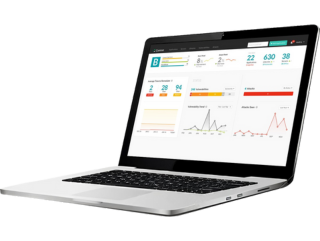
Table of Contents
With application and application programming interface (API) attacks on the rise, organizations need better solutions to both detect these threats and effectively respond to them. By observing behavior from within applications and APIs at runtime, Contrast ADR is ideally suited for improving a company’s ability to detect and respond to a wide variety of threats in real time, including zero-day exploits.
What is application threat detection?
Application threat detection refers to the measures implemented by an organization that are designed to identify, detect and mitigate threats directly within the application layer. It is the set of measures aimed at preventing data or code from being stolen or manipulated at the application level.
Application threat detection involves security during the application development and design phases, as well as systems and approaches that protect applications after deployment. Application threat detection should provide granular visibility into application and API behavior, recognizing and identifying anomalies to enable precise threat detection and response across the entire application layer.
Today's applications and APIs are primary targets and entry points for attackers. Despite robust development and pre-production testing efforts, applications inevitably contain vulnerabilities. Application security testing (AST) and software composition analysis (SCA) tools are valuable for identifying vulnerabilities in development but do not stop attacks in production.
Traditional security tools, such as Endpoint Detection and Response (EDR), Network Detection and Response (NDR), Cloud Detection and Response (CDR), Security Information and Event Management (SIEM) and web application firewalls (WAFs), often focus on the perimeter or elements outside the application layer (like network traffic, endpoint activity or cloud environments), leaving a critical blindspot. These tools may only see downstream indications of an attack and lack the internal application context needed for effective detection and prevention within the application itself.
How does application threat detection work?
Application threat detection is a crucial aspect of cybersecurity that focuses on identifying and mitigating malicious activity targeting software applications.
Here's a breakdown of how it generally works:
- Application monitoring and contextual insight: ADR solutions, a key part of this process, embed lightweight sensors or use telemetry data to continuously observe an application's behavior in real time. This includes tracking data flows, code execution and user activity. This granular monitoring helps identify unusual application behaviors — such as unexpected crashes, excessive resource usage or unusual API request patterns — that might indicate a potential security threat. Modern applications heavily rely on open-source libraries. ADR solutions profile the normal behavior of these libraries to establish a baseline. Any deviation, like unauthorized changes or abnormal function calls, can signal an attack on an application or API.
- Detection methods: Anomaly detection (i.e., behavioral analysis) is a core component. ADR tools analyze runtime data to recognize deviations from normal application behavior. For example, a logging library suddenly attempting remote code execution (RCE) would be flagged as an anomaly. Some solutions may use signature-based detection. While less effective against novel threats, this method compares observed data (like network traffic) against a predefined database of known attack signatures.
- Threat analysis and alerting: Once a potential threat is identified, the system conducts in-depth analysis to assess its severity and impact. This often involves correlating anomalies with known attack signatures and vulnerabilities. The results are distilled into actionable alerts that prioritize critical threats. These alerts provide context to help security teams understand the nature and scope of the attack, streamlining investigation and remediation.
- Coordinating a response: Advanced ADR solutions can implement automated response mechanisms. This might include blocking malicious actors, isolating and blocking malicious functions of code (while keeping the rest of the application operational), or quarantining affected services. This significantly reduces response times. For more complex or novel threats, security teams receive detailed alerts and intelligence to investigate and respond manually. This often involves using SIEM platforms to manage the incident response workflow.
What are the challenges for application threat detection?
Application threat detection faces several significant challenges in today's cybersecurity landscape. These challenges stem from the evolving nature of applications, the sophistication of attackers and the inherent limitations of traditional security tools.
Here are the key challenges for application threat detection:
- The application layer visibility gap: Despite security tools providing visibility into network traffic, endpoint activity, cloud environments and identity behavior, a critical blindspot remains in the application layer. Traditional security operations tools like Extended Detection and Response (XDR), EDR, NDR, CDR, SIEM and Security Orchestration, Automation and Response (SOAR) solutions lack application visibility and are ineffective for detecting and responding to application security incidents. They may only see downstream indications of an attack but lack the internal application context needed. This gap allows threat actors to increasingly gain access through applications without raising alarms.
- Limitations of traditional application security tools in production: WAFs, while useful for blocking simple attacks and known threats, operate at the perimeter and have no visibility into the internal workings of applications. They rely on static signatures, which sophisticated attackers can evade, and are known for generating a high number of false positives or under-blocking and over-blocking, burdening security teams. Similarly, EDR monitors endpoints (like servers) at the operating system and network level. However, EDR typically cannot detect if code inside the application is manipulated and can miss attacks that occur entirely within the application layer, meaning Security Operations Center (SOC) teams might only detect a threat after the application is compromised. And, while AST and SCA tools are valuable for identifying vulnerabilities during the development life cycle and preventing vulnerable libraries from being imported, they do not stop attacks in production environments. They often provide theoretical findings and cannot account for real-world exploitation in live production.
- Speed asymmetry between threat actors and defenders: Modern attackers are moving much faster, with the average time from vulnerability disclosure to active exploitation now just five days. After initial access, the average breakout time (lateral movement) can be as low as 48 minutes, and sometimes even 51 seconds. In contrast, the average time to identify a breach is 194 days, and containing it takes an additional 64 days. This significant imbalance gives adversaries a tactical advantage, allowing them to escalate attacks before organizations are even aware.
- Complexity of modern applications: Modern applications are not only connected across multiple networks but also to the cloud, exposing them to cloud threats and vulnerabilities. The dynamic nature of cloud-native applications requires continuous security during and after deployment. The widespread use of AI for software development and generating attacks exacerbates the problem, as it dramatically increases the potential attack surface. Plus, reliance on code libraries and third-party components (like frameworks, plugins and APIs) introduces inherited vulnerabilities that developers may not be aware of or control directly.
- Lack of centralized management: Without a centralized tool to support SecOps, development and application teams, businesses face extra overhead dealing with siloed teams or a lack of insight into reporting.
What are the best practices for effective threat detection?
Effective threat detection is a critical cybersecurity process focused on identifying behaviors that pose a risk to digital assets, operations and business. Here are the best practices for effective threat detection:
- Adopt a comprehensive approach to threat detection that leverages threat intelligence along with a risk-based approach to efficiently detect and mitigate threats. Threat detection should also include detection technology that highlights suspicious behavior patterns and activity across the application layer (and other applicable layers).
- Given that applications and APIs are now primary targets for attackers and entry points for a majority of breaches, organizations need to embrace additional security at the application level. ADR is an emerging cybersecurity category that provides granular visibility directly into the application and API behavior, recognizing anomalies and enabling precise threat detection and response within the application layer.
- Employ threat modeling. Have a structured approach that views a system from a potential attacker's perspective to identify, quantify, and address security risks. This should be a core component of the Software Development Life Cycle (SDLC).
What are the top application security threats?
According to Contrast Security’s own data from 2025, these are the most common types of viable application attacks:
- Untrusted deserialization
- Method tampering
- Path traversal
- Bot blocker
- SQL injection
- Unsafe file upload
In comparison, these are the most common types of application probe attacks:
- Reflected cross-site scripting (XSS)
- Path traversal
- SQL injection
- Command injection
- OGNL injection
A note on the terminology: Viable attacks are confirmed attacks against reachable and exploitable vulnerabilities. Viable attacks follow confirmed execution paths and manipulate application logic in ways that could lead to compromise. They represent the highest risk and demand immediate attention from security teams.
In contrast, probe attacks typically represent broad, automated attempts to discover vulnerabilities. Contrast’s runtime telemetry provides the ability to identify and separate out these spray-and-pray attack attempts that never reach an actual exploitable vulnerability. Probes aren’t dangerous on their own, but they provide early indicators of targeting and also provide perspective on the overall threat landscape.
What is API threat detection?
API threat detection is a critical process focused on identifying and mitigating risks to application programming interfaces (APIs), which serve as fundamental components of modern microservice architectures and are increasingly targeted by attackers. By focusing on the unique characteristics and attack vectors of APIs, API threat detection provides specialized protection crucial for modern, API-driven applications.
Benefits of Contrast ADR for application threat detection
Contrast ADR takes an inside-out approach, leveraging lightweight security instrumentation to directly observe the behavior of web applications and APIs from within their runtime environments. This internal perspective allows ADR to continuously monitor applications for behavioral anomalies and analyze data flows, enabling the identification of attempted or successful exploits as they happen. It provides real-time, in-production visibility and control for SOC teams to detect and respond to application exploitation.
Tools like the Contrast Graph build a real-time digital twin of an organization’s application and API environment, mapping live attack paths and correlating runtime behavior to expose how vulnerabilities, threats and assets are connected. This helps to prove exploitability and map attack paths at runtime.
Key benefits and capabilities of Contrast ADR:
- Real-time threat detection and blocking: ADR detects attacks on production applications and can block them in real time, often by policy, even interrupting exploits before they execute.
- Zero-day and unknown threat protection: Due to its internal positioning and focus on dangerous behaviors rather than static signatures, ADR can protect against zero-day exploits and unknown threats that bypass traditional security tools.
- High accuracy and reduced false positives: By observing behavior at runtime, ADR ensures highly accurate results, minimizing false positives and allowing SOC teams to focus on actual threats.
- Contextual threat intelligence: ADR provides security analysts with execution context from deep within the application, offering comprehensive playbooks and detailed insights (down to the line of code) to pinpoint, understand, contain and remediate application-layer attacks quickly.
- Integration with SOC workflows: ADR transmits threat and attack data, often enriched with context, to existing SOC tools like SIEM, enabling automated responses and streamlining incident response workflows.
Contrast ADR as the essential evolution in security operations, bringing EDR-like protection directly to the application layer. Just as EDR moved beyond legacy antivirus (AV) to proactively defend endpoints, ADR shifts beyond traditional pre-production AppSec scanning to deliver real-time, in-production visibility and precise response within live code. This empowers SOC teams to proactively neutralize threats based on actual application behavior.

